

Sub-Total: $0.00
Cold Weather Reliability: Navigating Friction and Condensation in Winter Environments
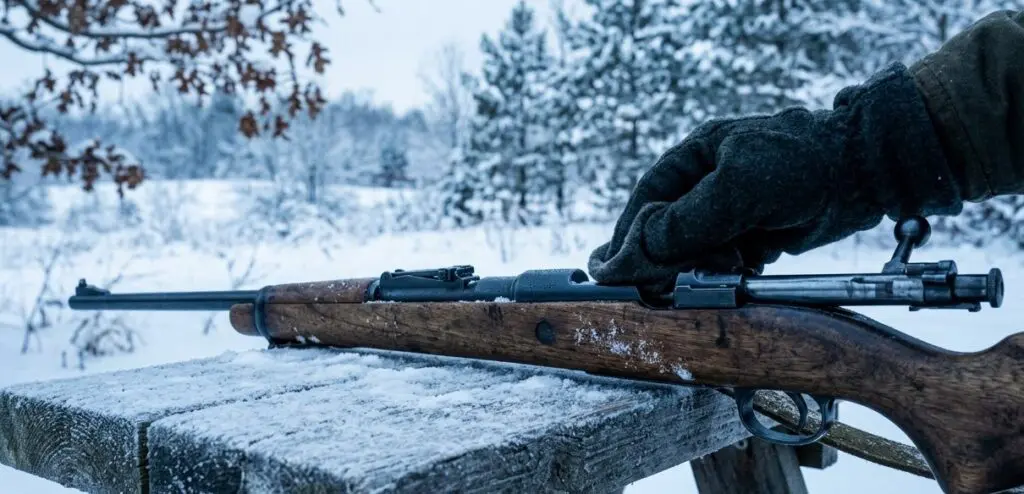
Operating a rifle platform in extreme cold conditions introduces mechanical variables that do not exist during mild spring or summer months. In sub-freezing environments, standard maintenance routines can actually lead to critical cycle failures. Achieving absolute reliability when the temperature drops requires a firm understanding of fluid dynamics, material contraction, and thermal physics.
1. The Chemistry of Lubrication: Viscosity and Freezing
The most common cause of cold-weather malfunctions – such as short-cycling, sluggish bolt travel, or light primer strikes – is the failure of standard lubricants.
- Fluid Viscosity Changes: Most commercial oils are engineered to retain their viscosity under high thermal stress (heat). However, when exposed to sub-freezing temperatures, these standard oils can thicken significantly, taking on a tacky, grease-like consistency.
- The “Grit Trap”: Thickened oil creates substantial viscous drag against moving components like the bolt carrier group rails or the firing pin channel. Furthermore, this sticky layer acts as a magnet for unburnt powder residue and carbon, creating a paste that can easily stall a cycling action.
- The Bench Solution: When preparing a platform for winter use, standard oils should be thoroughly degreased. Technicians recommend migrating to specialized dry lubricants or high-performance synthetic lubricants specifically rated for extreme sub-zero operation to ensure zero drag.
2. The Threat of Thermal Condensation: Where Rust Hides
The greatest environmental threat to a rifle during winter doesn’t actually happen while you are outside in the cold – it happens the moment you step back inside.
- Rapid Thermal Shifts: Bringing a freezing metal rifle into a warm truck cabin or heated room causes immediate condensation. Moisture from the warm air instantly liquefies across the cold steel surfaces, creating a layer of sweat across every square inch of the firearm.
- Hidden Moisture Traps: While it is easy to wipe down an exterior barrel profile, condensation forms aggressively inside critical, unexposed internal cavities. The extractor tunnel, ejector spring pockets, and the trigger group assembly are prime locations where trapped moisture will quickly turn into flash rust.
- The Bench Solution: Allow the firearm to acclimate slowly to temperature changes by leaving it inside its case for an hour after coming indoors. Once acclimated, detail-strip the bolt carrier group to verify the extractor pocket is completely dried and protected.
3. Material Contraction and Component Tolerances
Extreme cold alters the physical dimensions of metals and polymers due to thermal contraction. While modern sporting rifles are built with clearance tolerances to accommodate normal operation, combining tight aftermarket parts can introduce friction points when materials shrink.
- Varying Shrinkage Rates: Aluminum, steel, and polymer contract at different rates when exposed to sub-zero temperatures. A tolerance match that feels completely smooth on a warm workbench can bind slightly when the receiver shrinks in the field.
- Ensuring Mechanical Clearance: Ensuring that critical interaction points – such as the bolt lug engagement or the gas rings – are verified for clean clearance helps prevent sluggish locking or unlocking cycles when the metal contracts.
4. The Bench Summary
Winter reliability isn’t about changing the design of your platform; it’s about adapting your maintenance strategy to the laws of physics. Swapping out high-viscosity oils for cold-weather synthetics, allowing your gear to acclimate slowly to indoor heat to prevent condensation, and understanding how materials contract will ensure your platform cycles flawlessly regardless of the thermometer.
If your rifle is short-cycling or experiencing sluggish performance on the winter range, auditing your lubrication choices and verifying component clearances is the first place to look.